14 Days | 3 Peaks | 6,000m
This 14-day intermediate expedition trades the Southern Alps for the high-altitude giants of the Andes. Bolivia is a land of massive contrasts, where ancient culture meets some of the most accessible 6,000m objectives on the planet. Test your engine and your cramponing across three classic peaks, up to 6,000 m
Part 1: Acclimatising and Build-Up
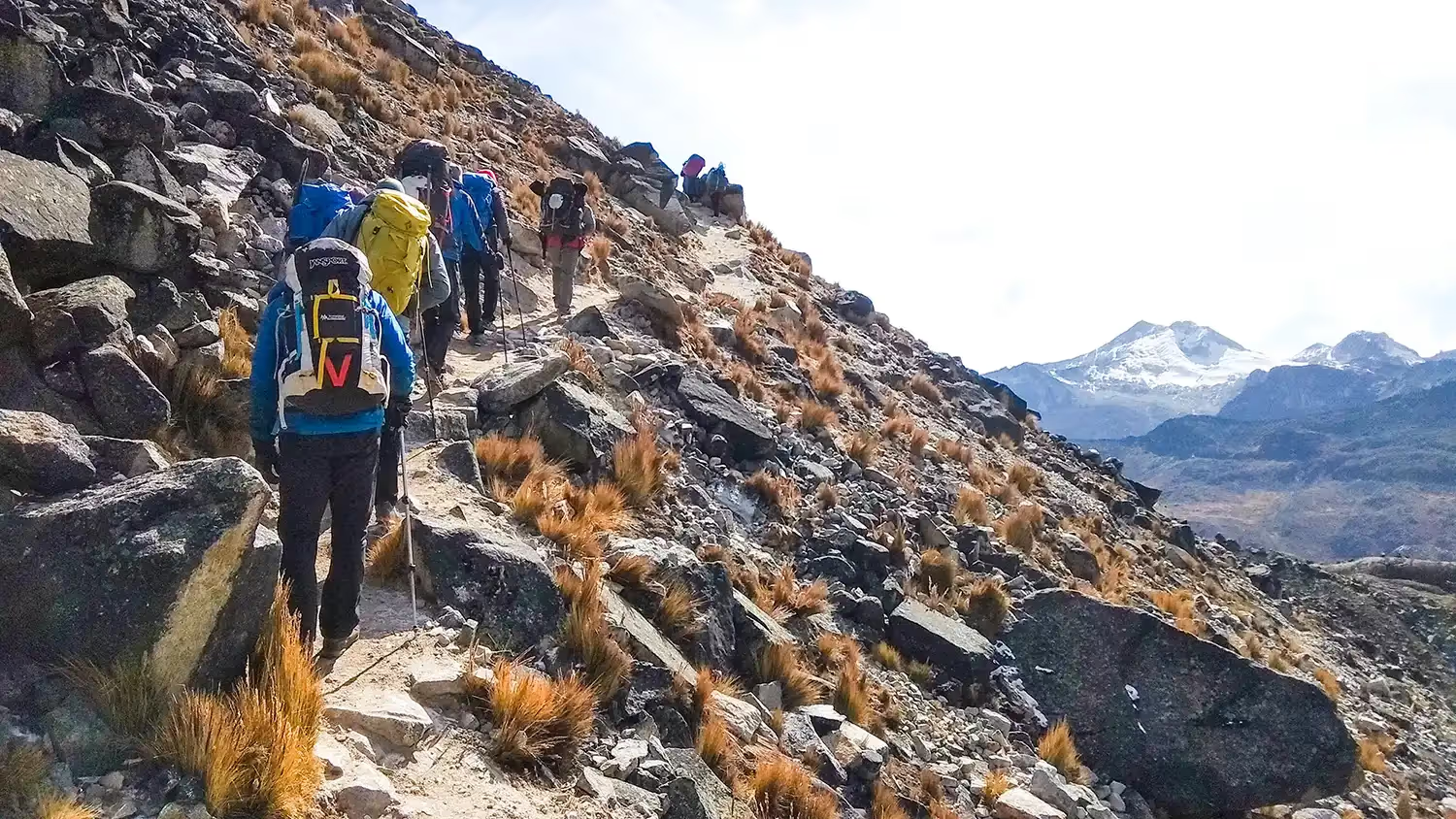
The mission begins in La Paz (3,640m), the world’s highest capital. We don’t rush the thin air; the first week is all about "climbing high and sleeping low." We’ll trek the local gems and the shores of Lake Titicaca, letting your body find its rhythm at 4,000m before we point our crampons toward the big stuff.
Part 2: The Peaks
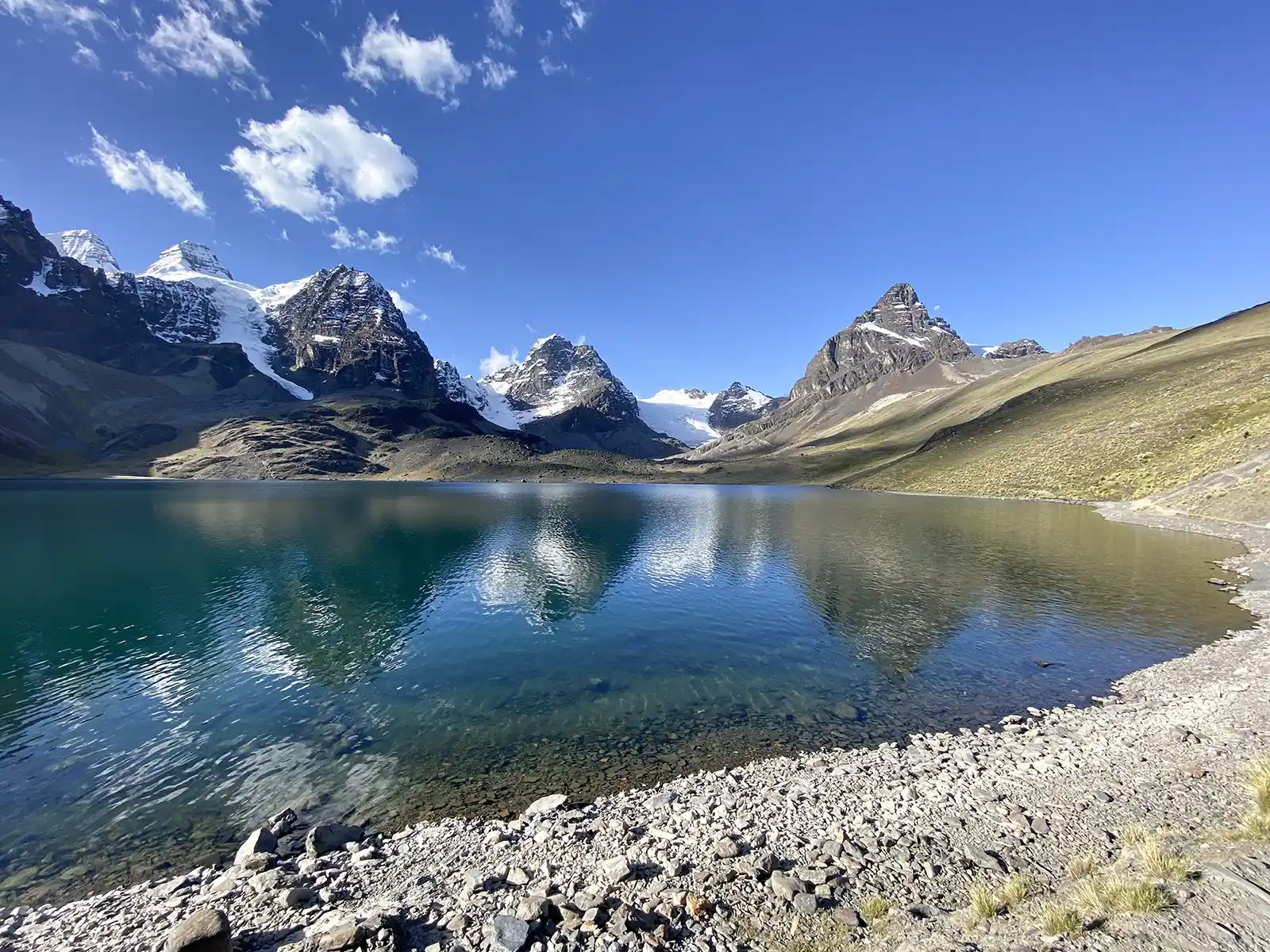
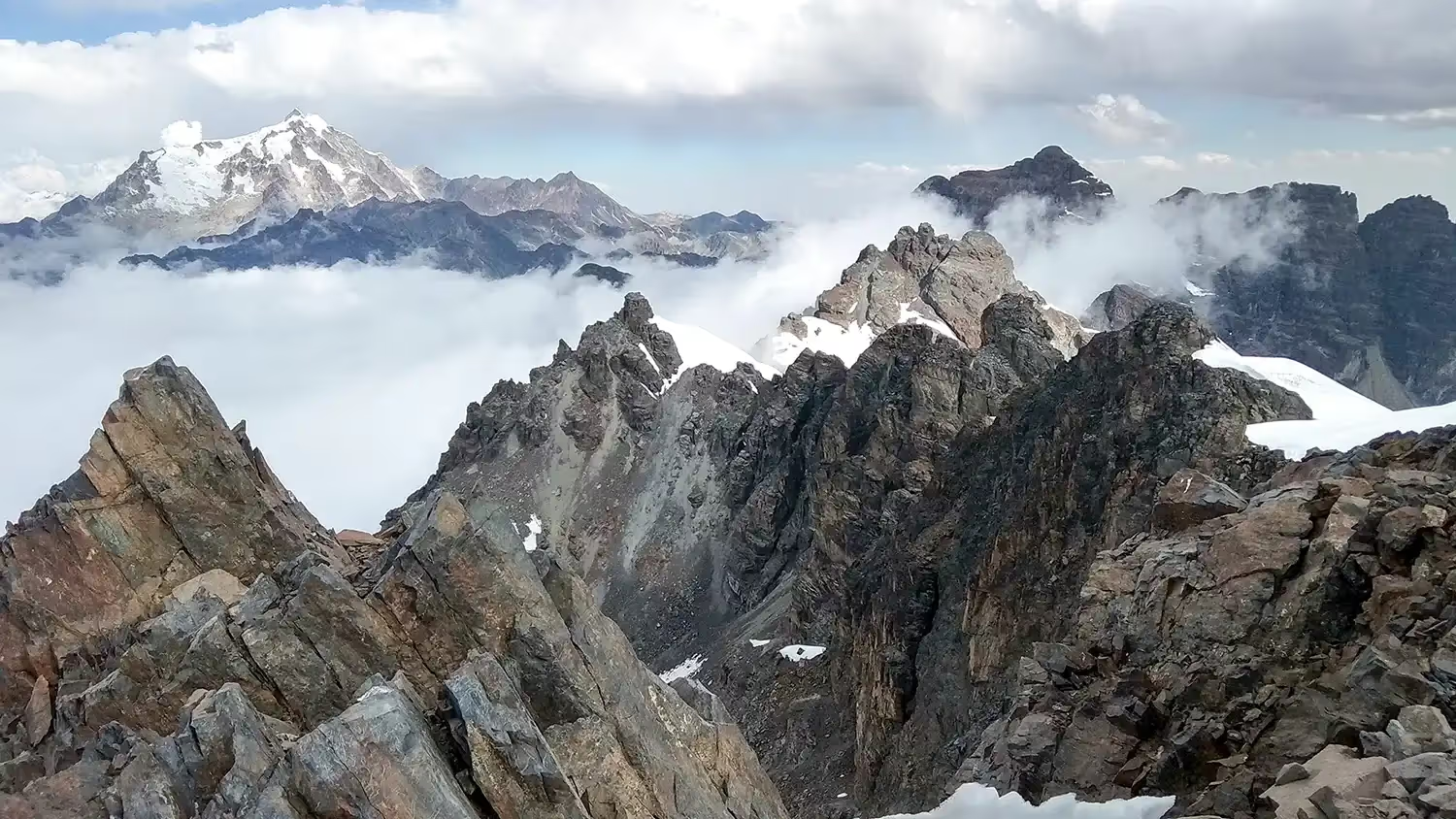
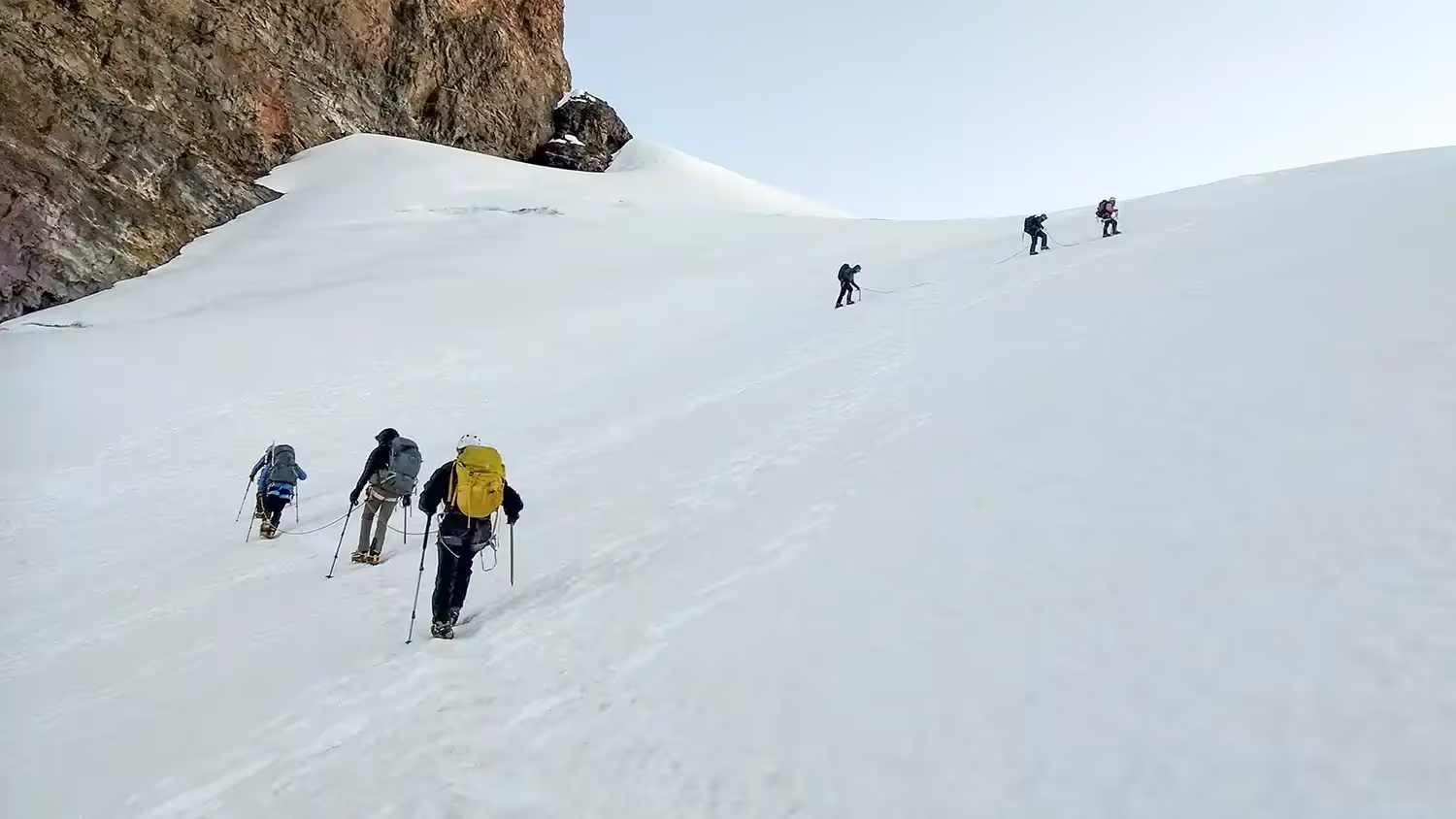
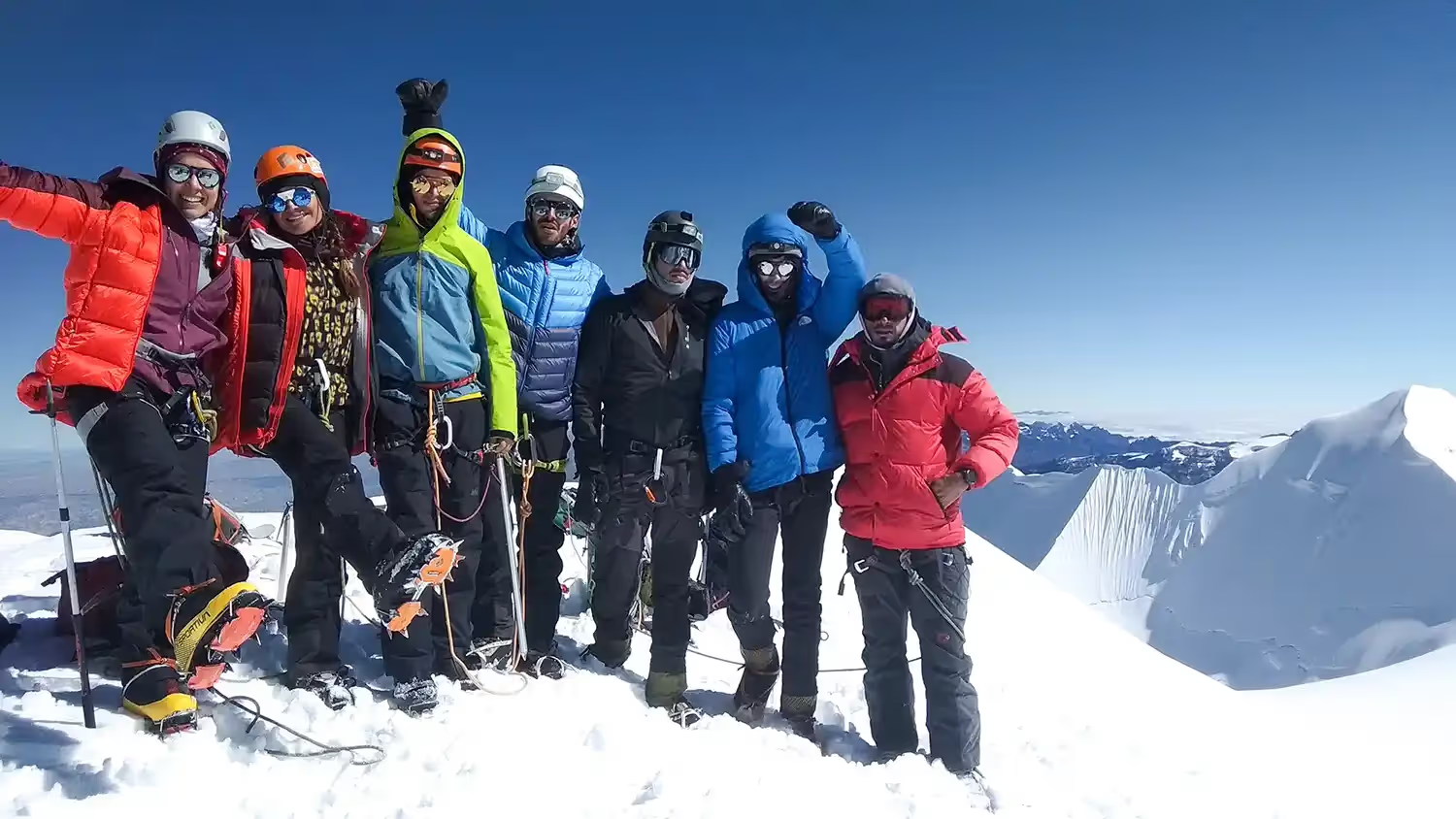
Once acclimatised, we move into the jagged Condoriri National Park. This is the business end of the trip—shifting from high-altitude trekking to technical mountaineering. We’ve set our sights on a trio of Andean classics:
Pico Austria (5,350m): The perfect warm-up with a view that earns every lungful of air.
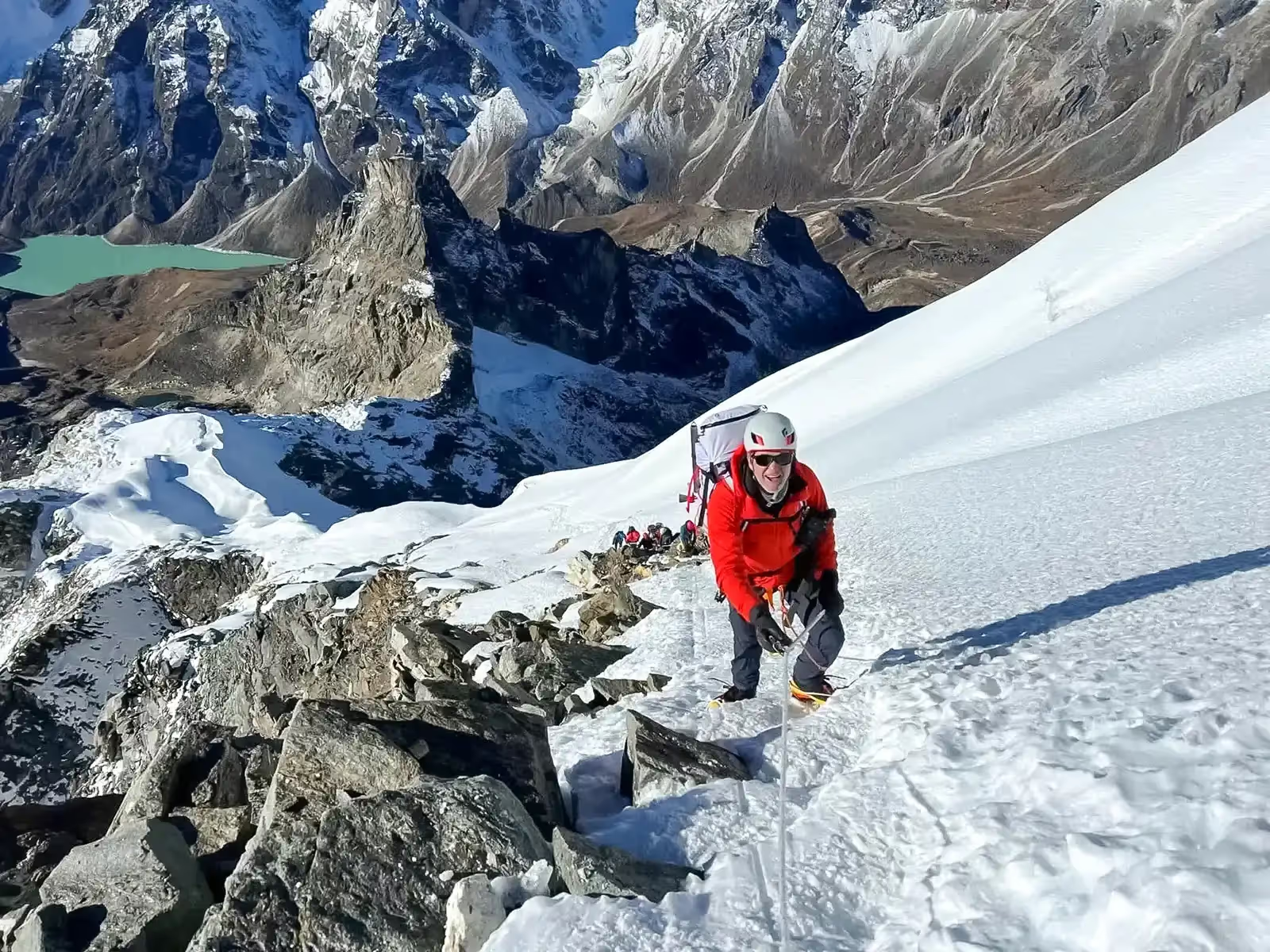
Pequeño Alpamayo (5,410m): An aesthetic, knife-edge ridge that’s a true Southern Alps-style classic.
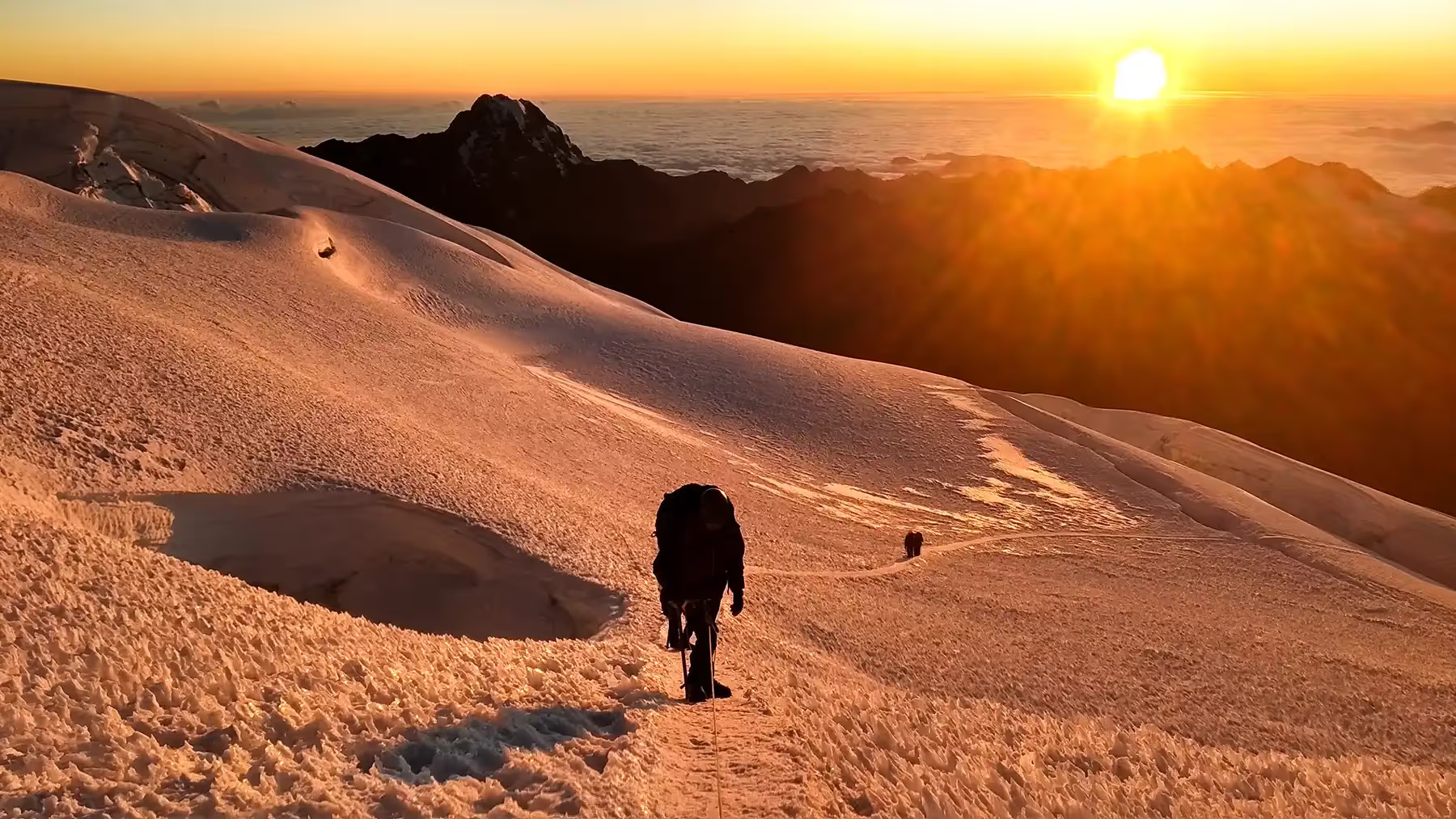
Huayna Potosi (6,094m): The big one. A worthy physical challenge and your chance to break the 6,000m contour!

Light-weight Backpacking
The beauty of an assisted expedition is that you do not carry a huge backpack.
Departure: ex-La Paz, Bolivia
La Paz, Bolivia’s capital city, is one of the most important cultural cities in Latin America, as it hosts several landmarks belonging to colonial times. The climate has a mix of subtropical highland and sub-polar oceanic characteristics. https://en.wikipedia.org/wiki/La_Paz
2027 Prices and Dates
To Be Confirmed
Alpine Climbing Experience
This expedition is ideal for people who have participated in either our Alpine Skills Course (ASC), or Mountain Experience Course (MEC), or have an equivalent level of climbing experince.
Endurance Training
Although our expedition is not highly technical, it is very strenuous, and not to be underestimated. Altitude can and does affect everyone differently. You must train for several months before departure to make the trip as enjoyable as possible.
Everyone will need to pay attention to what their own body is telling them - and let the guide know!
We use pulse oximeters during the expedition. These are small medical instruments that measure the oxygen saturation level of your blood to indicate how you are acclimating.
Minimum Bookings
A minimum of 4 participants is required to run a trip. Please contact us to check what the current bookings are. If minimum requirements aren’t available, you will receive a full refund. The cut-off for bookings is 90 days before departure.
Passport: Must be valid for at least 6 months beyond your trip.
• Visas: NZ citizens are allowed 30 days without a Visa, along with Canadian and Australian citizens. UK citizens can stay up to 90 days without a visa. Most other visitors do not need a visa for stays under one month.
• Stamps: Ensure you get an entry stamp (especially if arriving by land). You will be fined if it is missing when you leave.
• Departure Tax: There is a $25 USD fee when leaving Bolivia. Check if this is already included in your plane ticket.
• Flights: Routes usually go through Santiago, Chile. We recommend booking "flexible" tickets and using a travel agent to handle any sudden itinerary changes or emergencies.
• Pre-Trip Info: You will receive a final logistical packet (hotels, contacts, etc.) 30 days before the expedition starts.
• Insurance: You must arrange your own travel and emergency insurance. Standard policies often exclude "expeditions," so use specialised providers like Global Rescue or Ripcord.
• Medical Check: We require a medical questionnaire and a GP physical before departure. This also assists in arranging your travel Insurance. Ensure all personal prescriptions are up to date.
• Vaccines: Consult your doctor; Typhoid and Hepatitis A are common recommendations for Bolivia.
• Weather: The dry season (April - October) offers stable snow and clear skies. Expect sunny days (12ºC to 18ºC)and cold nights (-5ºC to ‑15ºC).
• Language: While our crew speaks some English, most locals do not. Learning basic Spanish phrases for food, water, and toilets is highly recommended.
• Food: Expect plentiful, "Central European" style meals with lots of meat. Vegetarians must notify us before the trip.
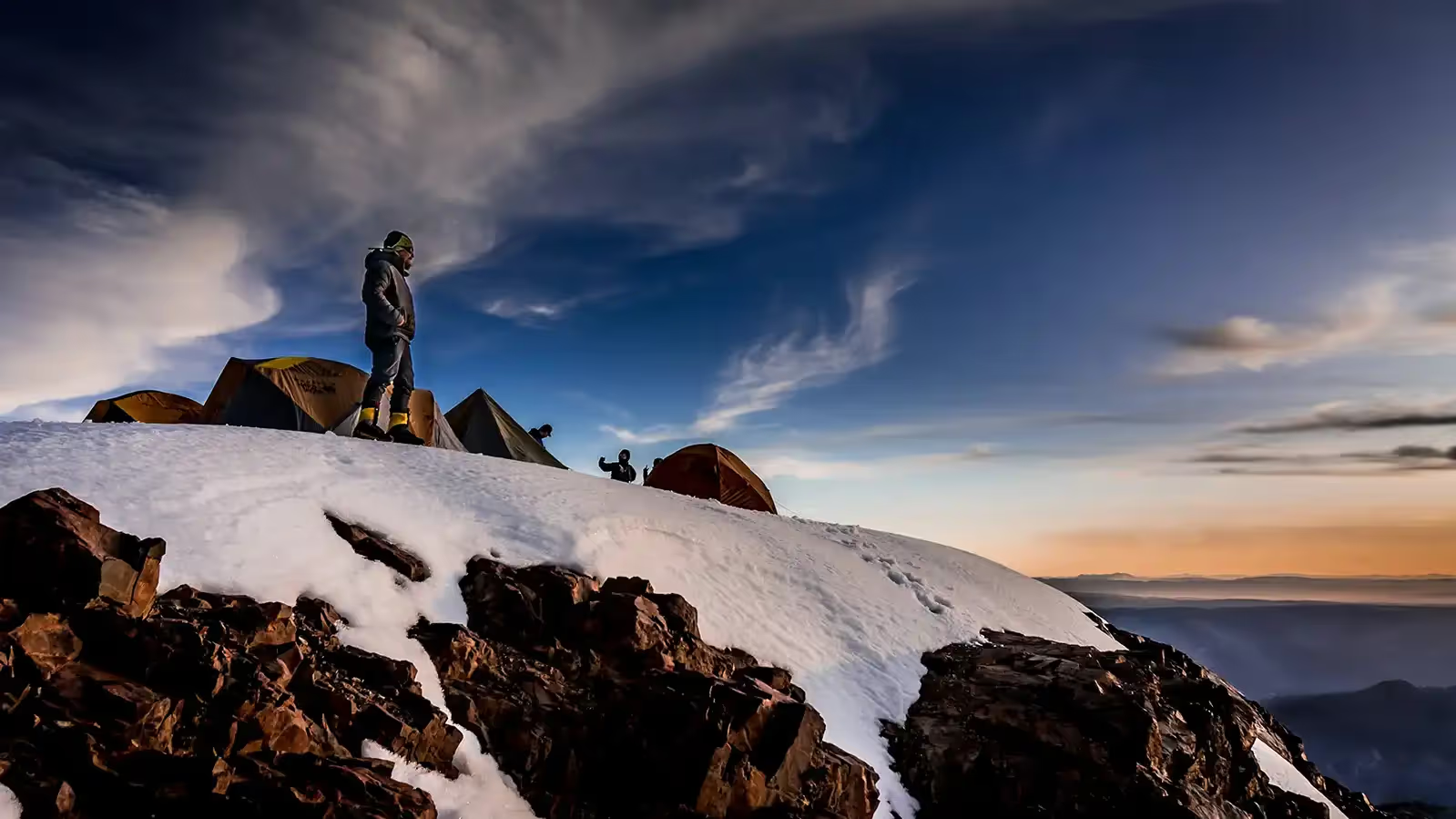
• Living: You will stay in a mix of hotels, mountain huts, and 2–3 person tents. Large mess tents are provided for dining.
• Support: To help you acclimatise, we provide cooks, porters, and mules to carry the heavy loads.
• Communication: Your AGL guide(s) have VHF radio support and a satellite phone for emergencies.
• Currency: The local currency is Bolivianos. Bring US Dollars in cash for easy exchange in La Paz, or pre-order Bolivianos from your bank.
• Tipping: There is no prerequisite tipping culture; it is appreciated by the locals to receive a token of gratitude for their efforts.
• Customs (NZ/AU Travellers): When returning home, clean your gear (boots, tents, etc.) thoroughly. Present a written list of these items to customs to speed up your clearance.

Your guide will send you a comprehensive check list at least 30 days prior to the expedition start date.
There is no facility to rent from Alpine Guides in NZ. You can rent equipment in La Paz at “Andean Basecamp”. However, equipment needs to be reserved ahead of time.
After the exchange rate the rental prices are similar to hiring gear in NZ or Australia.