trip overviewplan your triptrip itinerarybook nowMake An Enquiry
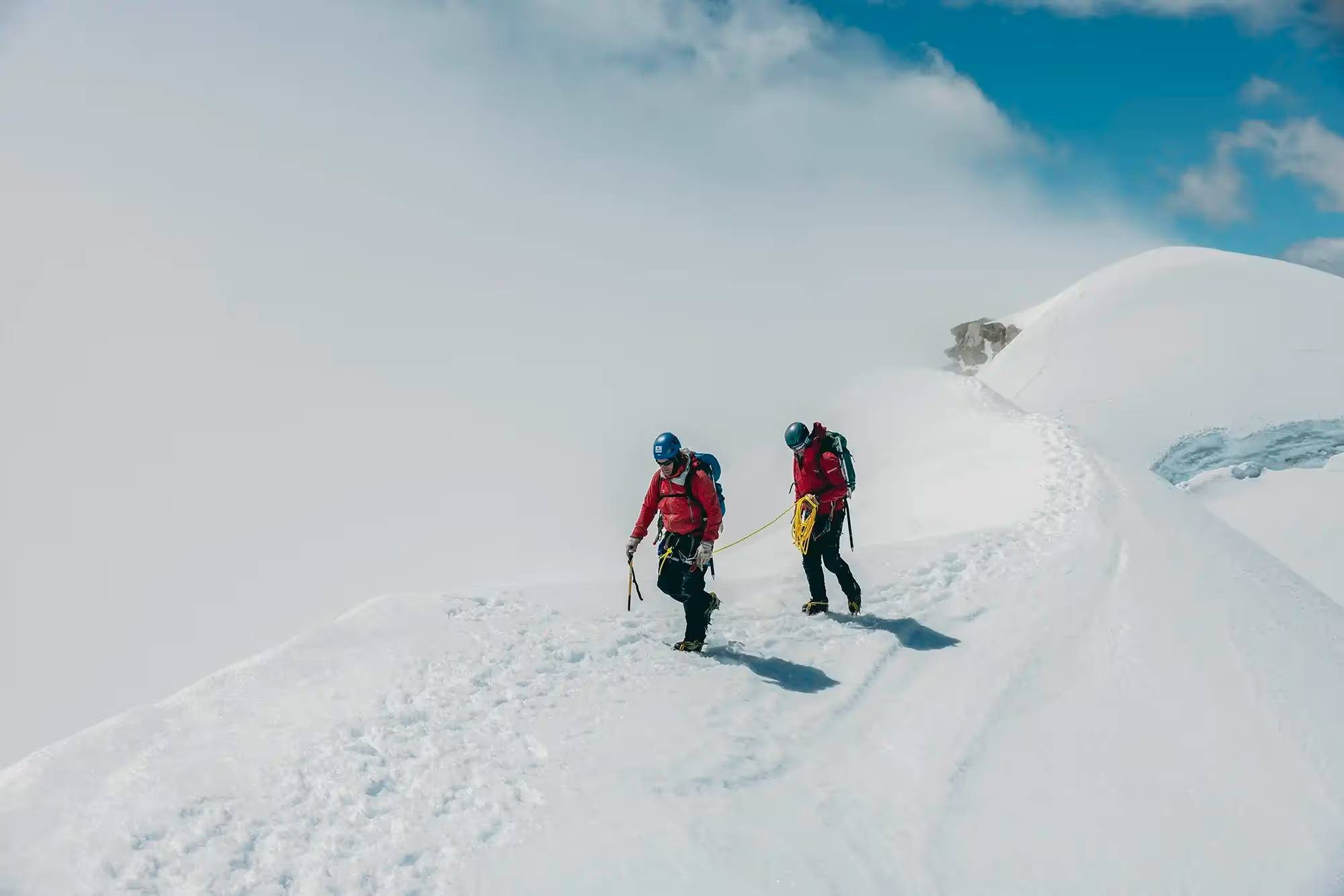
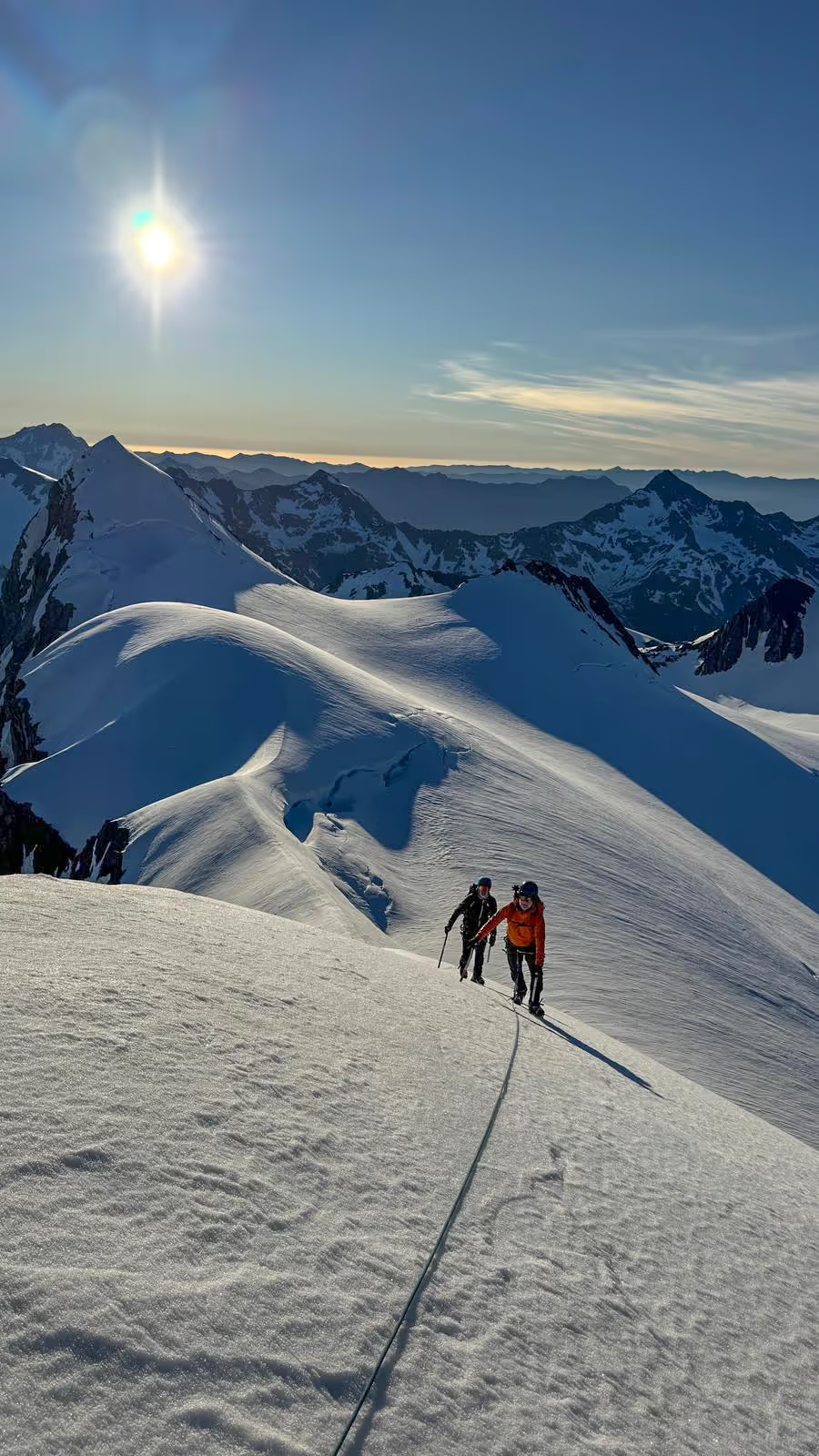
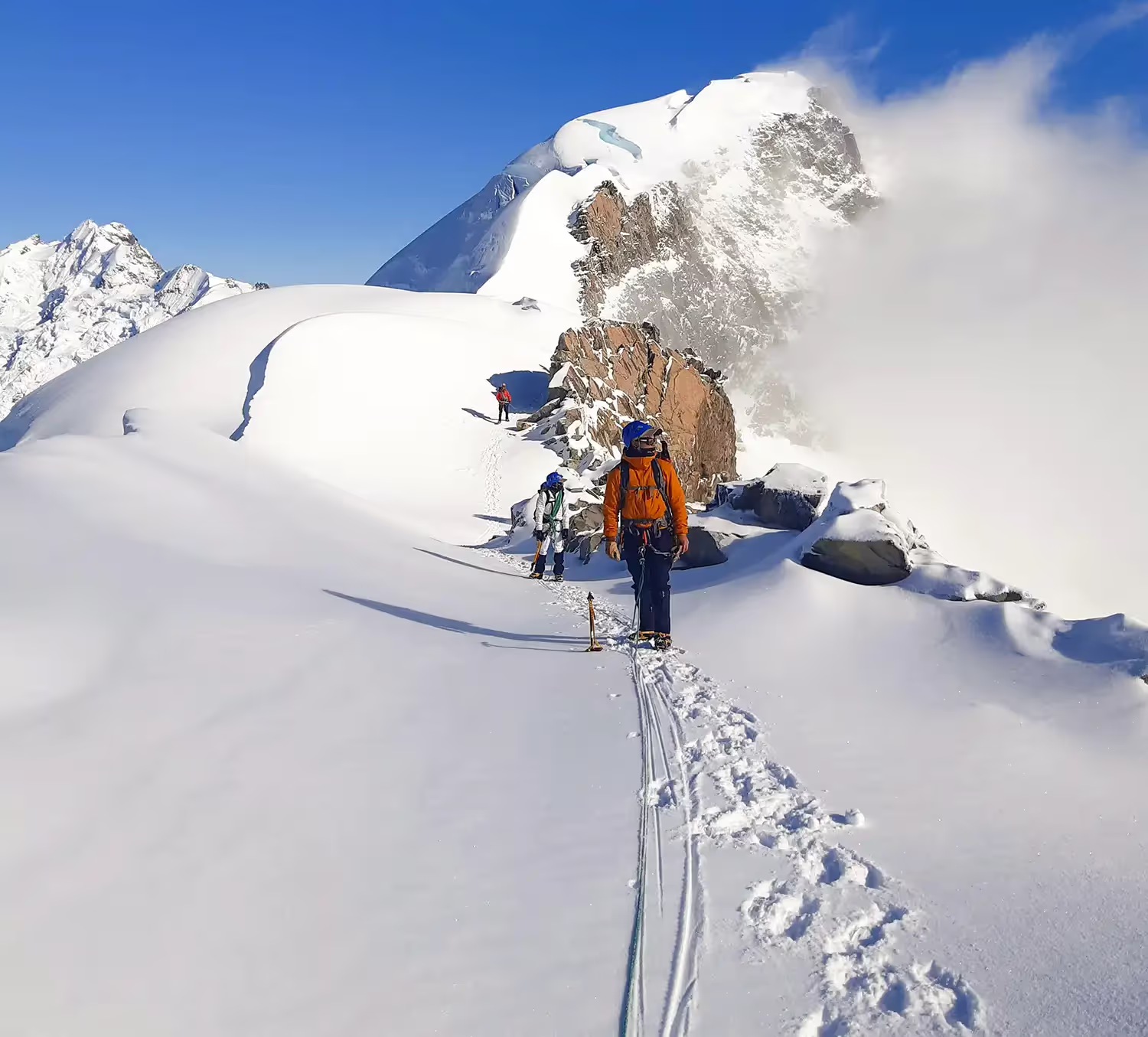
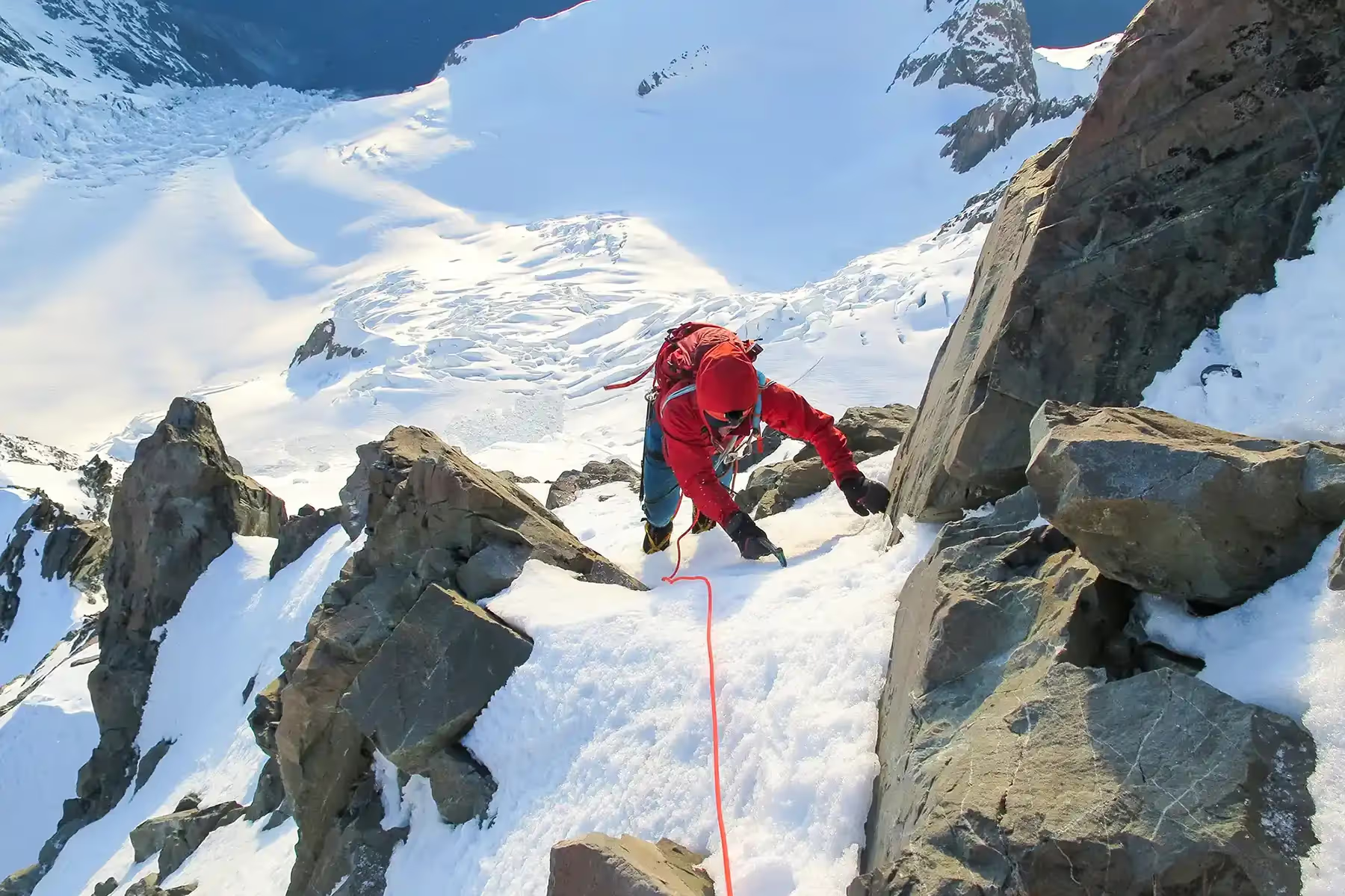
Roped climbers walking along snowy ridge

Hochstetter Dome

Historic Snow and Ice Climbing

A guided mountaineering ascent of one of Aoraki Mount Cook area's "classic" snow and ice summits.

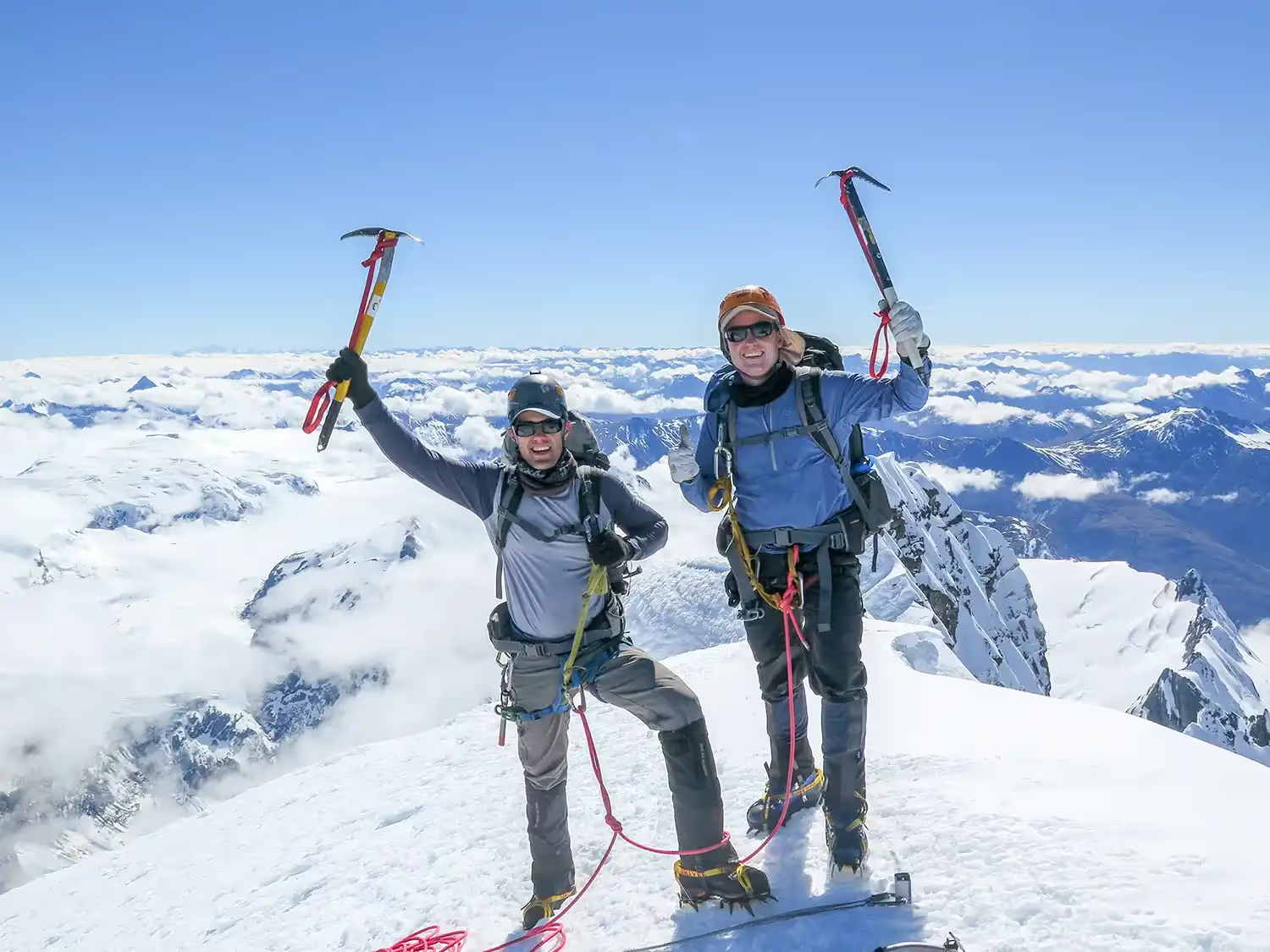
At 2,834 metres, Hochstetter Dome is a perfect guided ascent for climbers with some basic mountaineering skills. The peak was first climbed on 27 March 1883 by Austrians Dr. Robert and Anna von Lendenfeld, with New Zealand porter, Harry Drew. It is regarded as a classic NZ ascent.

Hochstetter is classed as a NZ Alpine grade 2 peak. However, the mountain lies deep in the serious glaciated terrain of the Southern Alps.

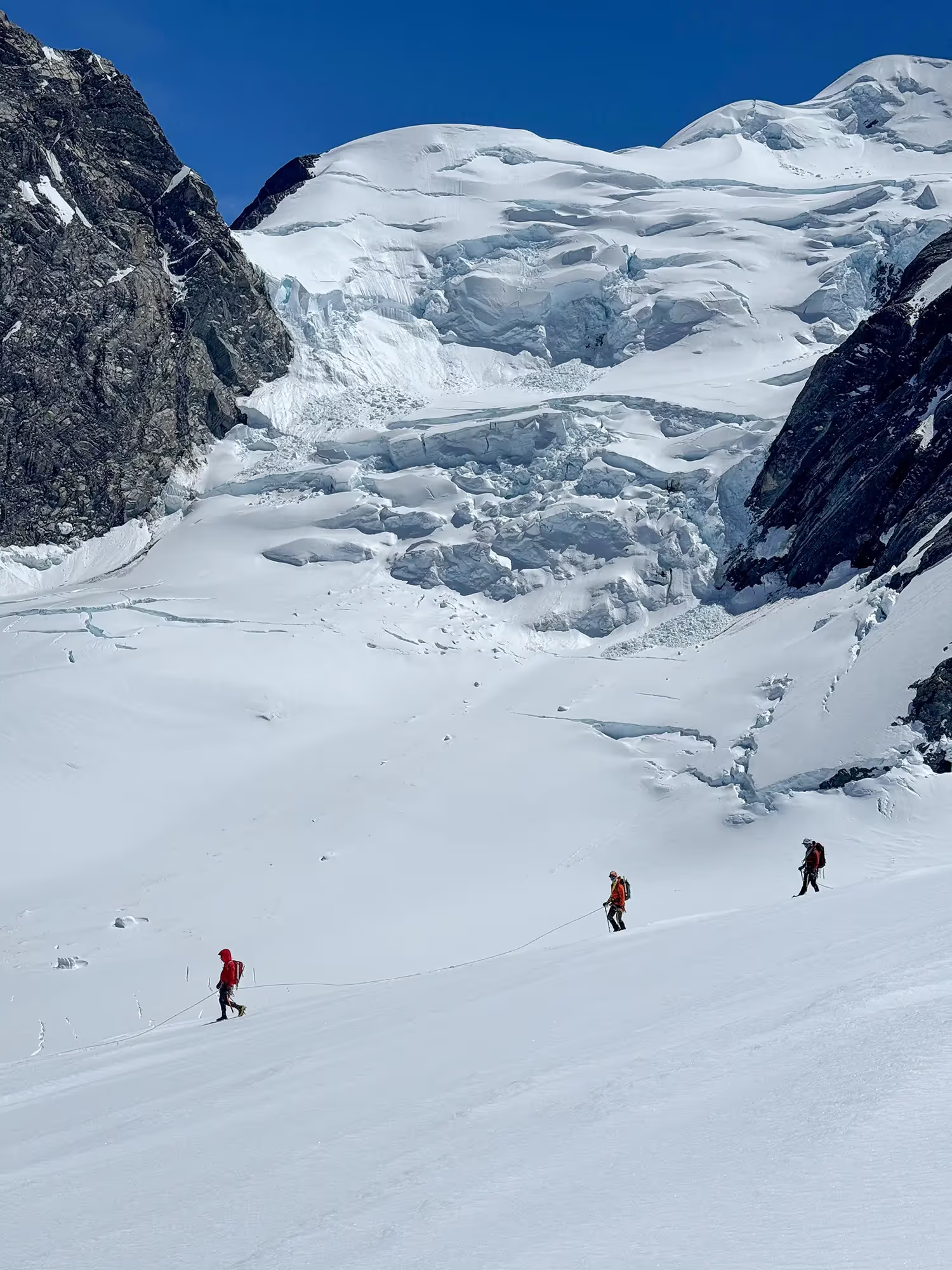
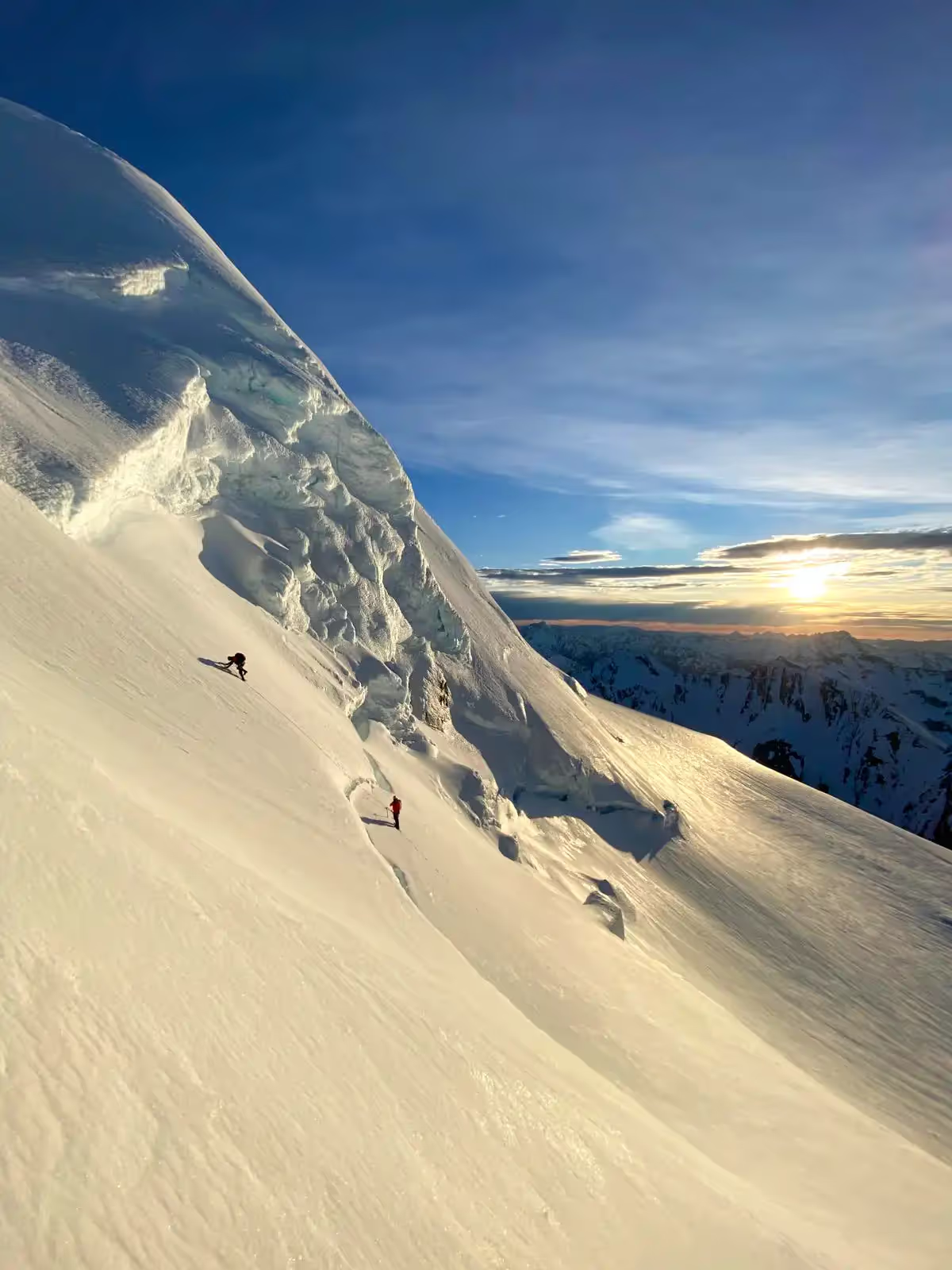
All climbers will be roped together for glacier travel. Careful negotiation of crevasses is a feature of the climb, especially as summer progresses, and conditions change.

This guided climb is a perfect introduction to the Mt Cook area, or a wonderful way to come out of "alpine retirement". When conditions are right, a full traverse of both east and west peaks is a fantastic achievement.

trip level
Moderate
guide ratio
1:1, 1:2
duration
4 Days
season
Year Round
Group Size
Min 1, Max 2
start location
Alpine Guides' base, Aoraki Mount Cook
start and finish time
8:30 AM (first day) 5:00 PM (last day)
mountain Access
Aircraft
Click for more info
price
From NZ $5,125
book nowMake An Enquiry
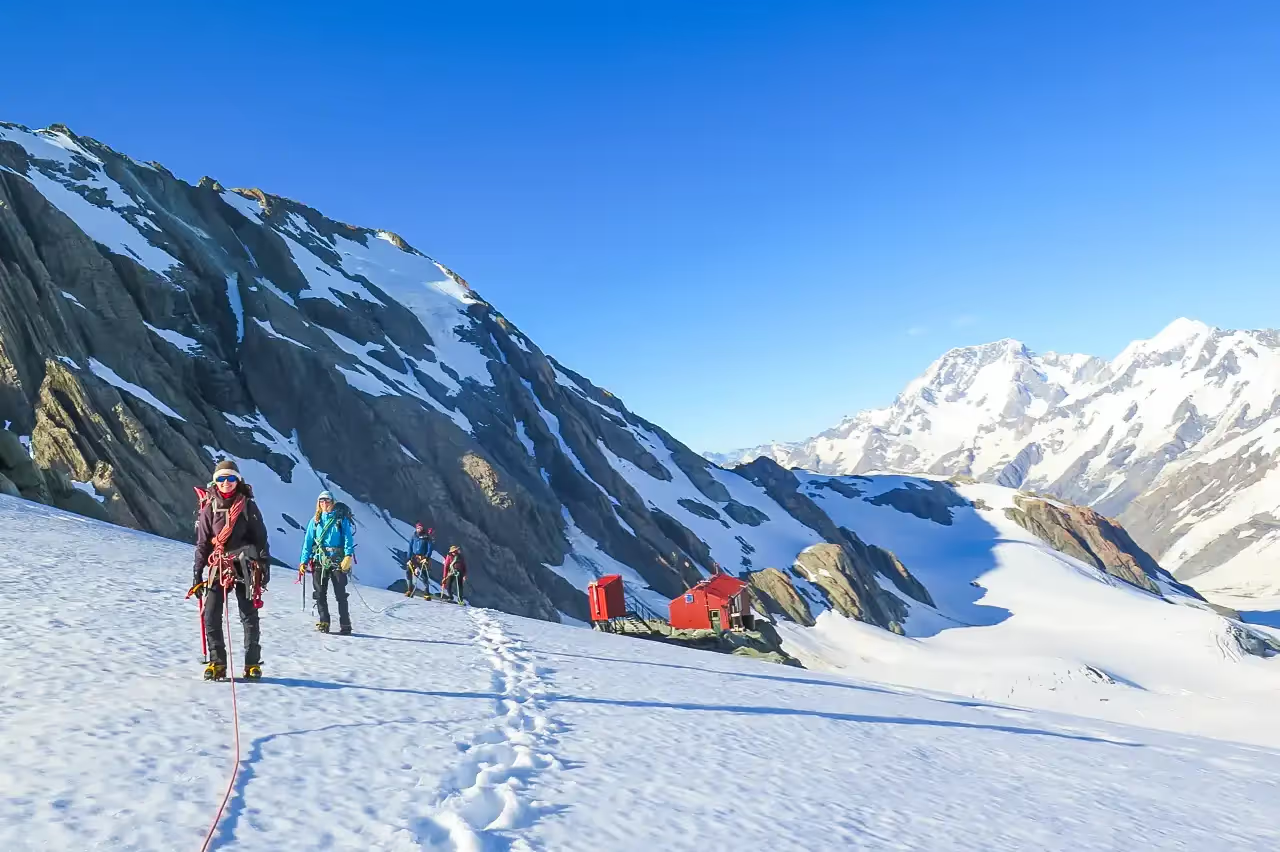
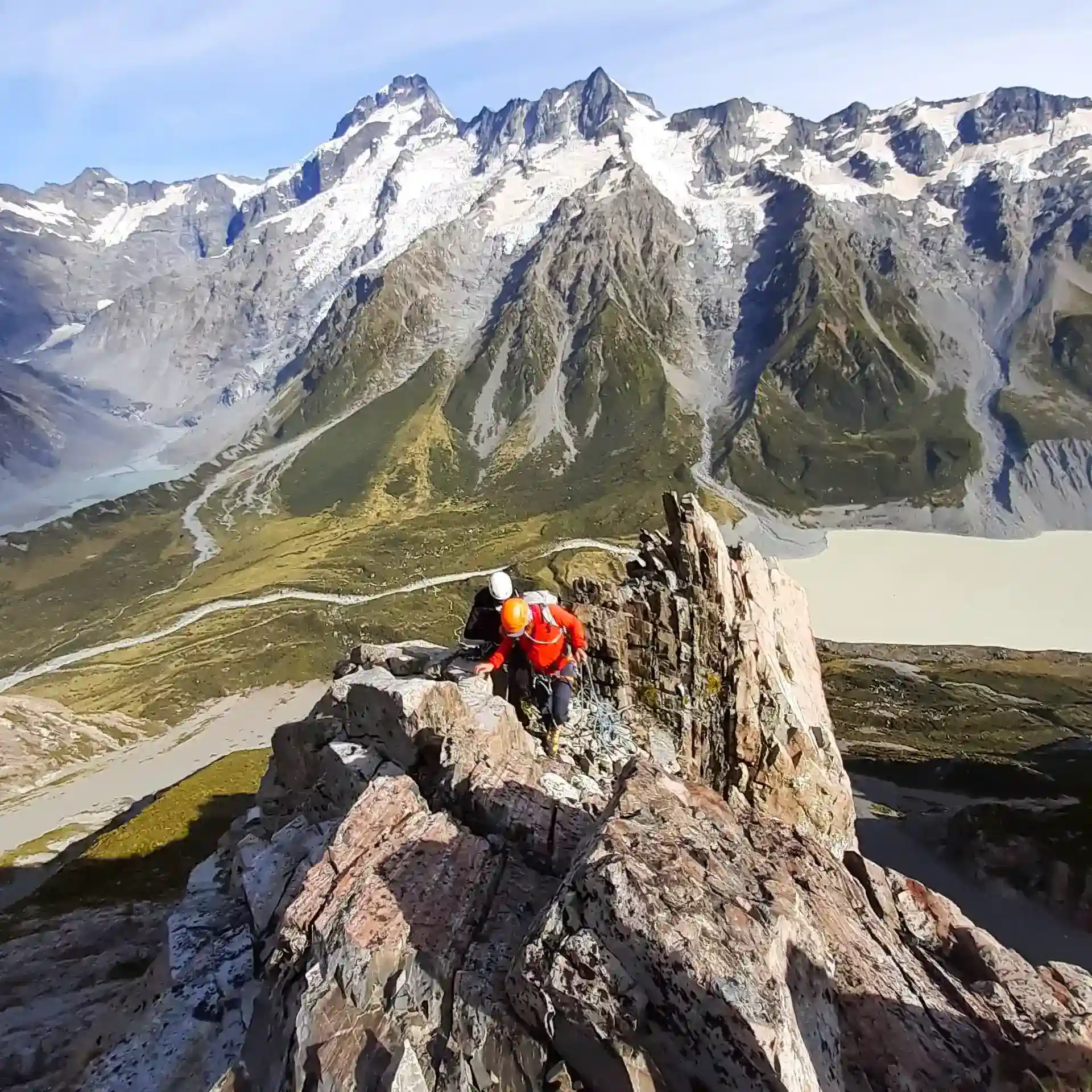
Hochstetter Dome climbers departing Tasman Saddle Hut
Hochstetter Dome - the Ascent

Perched at the head of the Tasman Glacier, Hochstetter Dome is a classic Aoraki Mount Cook objective. Based from the conveniently located Tasman Saddle or Kelman Huts, the climb involves a 500-metre vertical ascent over moderate but serious glaciated terrain.

A typical day begins with a civilized breakfast, reaching the summit in time for lunch. While the climbing is straightforward, confident crampon and ice axe skills are essential for a safe round-trip of 6–8 hours.

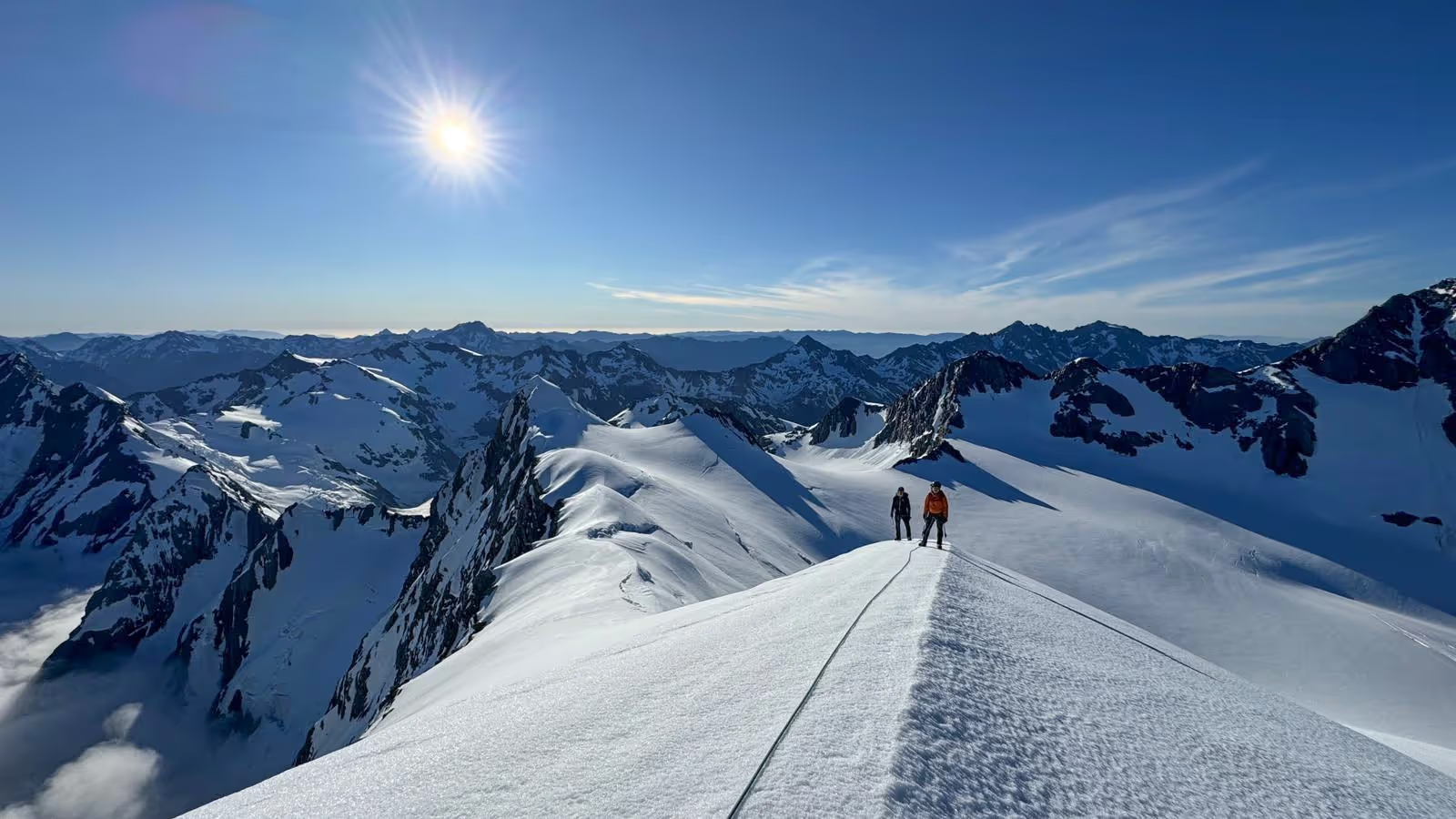
Twin Peaks: Traverse the breathtaking 500-metre ridge connecting the Dome’s two summits.

The View: On clear days, the 1,400-metre drop into the Whymper Glacier reveals a stunning contrast between high-alpine ice and the temperate forests of the West Coast.

Extended Objectives: Stronger teams may include Mount Aylmer (2,699m) for a complete east-to-west traverse.

The Winter Bonus: For capable ski mountaineers, the descent offers a spectacular 1,000-metre run from the Hochstetter Shoulder to the lower Tasman Glacier!


Price List
loading departures...
Prices are per-person, in NZ Dollars
Trip Schedule
loading departures...
Price List
Group Size
Price
1
NZ $4375
2
NZ $2675 per person
3
NZ $2100 per person
4
NZ $1775 per person
gear list
Trip Profile

Hochstetter Dome route options

A 4-day introductory guided ascent to a classic NZ snow and ice summit.

Hochstetter Dome route options

A 4-day introductory guided ascent to a classic NZ snow and ice summit.

Know before you go

Plan Your Trip
What's Included
included
  • Professional Guide and National Park fees
  • All meals from lunch day 1 to lunch day 4.
  • Flights in and out of the mountains
  • Hut fees
  • Technical climbing and safety equipment
  • Local accommodation for any nights necessary during the trip
  • Alpine Guides Technical Manual
Other Info
Skills you need

While Hochstetter Dome is a technically straightforward ascent, it is a serious undertaking set deep within high-alpine, glaciated terrain. This is not a peak for the completely inexperienced; it requires a good foundation in mountain skills and the fitness to match.

You should have:

  • Spent time on crampons and be comfortable with self-arrest. Competence with crampon and ice axe is essential.
  • General mountain experience similar to the completion of our Mountain Experience Course, or similar.

Your prior experience can be through personal climbs or guided instruction courses. Glacier travel skills are helpful but not essential.

Other Info

Seasonal Climbing Conditions

  • Summer (mid - October - April) in New Zealand offers the best conditions for alpine climbing and is the best time for introductory-level mountaineering.
  • Winter (July - October) is an excellent time for more experienced alpinists. Hochstetter Dome can be climbed in snowshoes (don't forget that 1,000-metre descent

Read more about seasonality, weather, and snow conditions here.

Other Local Objectives and Options:

  • If you summit early there may be an option to climb one or more additional peaks (depending on the available time, weather, snow conditions, and your ability).
  • These can include: Mt Aylmer, Peak 9144 (2,699 m), Mt Abel (2,688 m) or Mt Annan (2,934 m).  
  • Ice climbing in the amazing seracs and ice caves of the Darwin Ice Fall is a great way to test your crampon skills - or try something new.

The Hochstetter Dome trip plan

When dealing with a dynamic environment, it pays to take a flexible approach.
Concession holder with Department of Conservation, authorised to operate in New Zealand’s alpine conservation areas.Kea Conservation Trust logo representing Alpine Guides’ support for Kea Conservation Trust and the protection of native alpine wildlife.Partner logo of International Federation of Mountain Guides Associations representing Alpine Guides’ alignment with international guiding standards and best practice.Partner logo of New Zealand Mountain Guides Association representing Alpine Guides’ commitment to professional guiding standards and safety.Partner logo of New Zealand Mountain Safety Council representing Alpine Guides’ commitment to mountain safety and education.Qualmark Gold Award logo recognising Alpine Guides’ commitment to exceptional quality and sustainable tourism practices.Qualworx - Safety Audit CertifiedTiaki logo representing Alpine Guides’ support for the Tiaki Promise.Alpine Guides support Trap NZ